
Today, July 2, it’s Freedom from Fear of Speaking Day worldwide, and I’m celebrating by launching a new book I curated, compiled, and co-authored with some wonderful people.
It’s called: “Voices of Transformation: Real Stories. Bold Action. Global Impact.”
I started this project in December. I believe in giving on the day I was born (December 16th), a tradition from my ancestors, so I decided to create a book program that could also help impact-centered leaders deliver a TEDx talk.
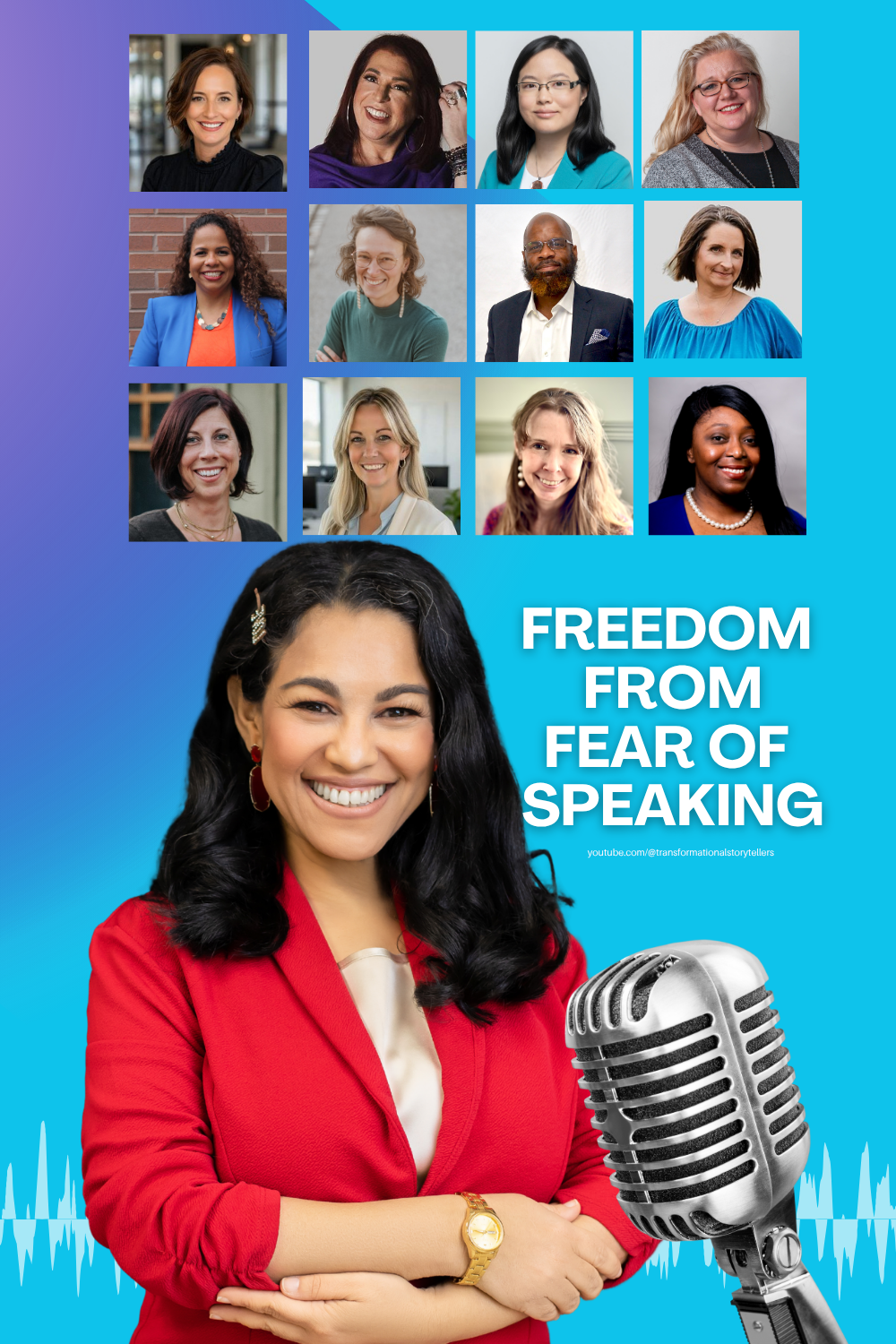
I’m excited to say that, as of today, the people who said yes to the project, yes to the work, and yes to you, the reader, can now say:
1- They finally wrote their TED talks! THIS IS MASSIVE! A few of them even got to deliver their TEDx talk because, as a TEDx event organizer and coach, I was happy to recommend them!
2- They were featured globally across hundreds of media outlets, including ABC, NBC, CBS, FOX, and more!
3- They are published in the Voices of Transformation book, which is now an Amazon bestseller in the categories of “Public Speaking and Speech Writing,” and “Public Speaking Reference.”
And what I wanted more than anything was to see relationships flourish in the community calls, mindsets shifted during our live training calls and community conversations, and storytelling unlocked in 1200 words and practice videos using my S.T.O.R.Y. System for Transformational Storytelling… That GIFT makes me proud.
Tips and Strategies to Overcome Glossophobia from Confident Speakers
As a public speaker and speaker coach for almost two decades, and a TEDx event organizer, I know that many times we don’t share our truth because of stage fright or performance anxiety, which is why today, I also hosted a special episode of The Transformational Storytellers Show to acknowledge and address anxiety associated with public speaking, to encourage our audience to share their stories and ideas with the world, even as nervous speakers.
The fear of public speaking is known as Glossophobia. If you have felt the fear of speaking, you are not alone. The fear of standing in front of an audience is more common than the fear of death. But public speaking anxiety doesn’t just show up in a large audience. It shows up in small groups everywhere we might be: at work, at home, in our communities, in various social situations.
Whether it’s in team meetings, in front of the class, or anytime you think of sharing your stories and ideas, public speaking fear is a common social phobia that can cause brain freeze, dry mouth, communication apprehension, anxiety symptoms, and even a panic attack.
Speech anxiety can sabotage your communication skills, but also your leadership skills, but thankfully, a select group of authors in the Voices of Transformation book, shared specific techniques on how they overcame their intense fear around public speaking, so you can too!
1. Megan Babcock:
“My name is Megan Babcock. I’m the author of Chapter 14, ‘3 Simple Questions So You Can Start Getting Unstuck and Live Your Dreams,’ on page 76 of Voices of Transformation, and my chapter helps people who have a dream and know they want more out of life, but feel anxious and overwhelmed by their current situation. It is for those who are tired of staying stuck and are ready to become who they were created to be.
The hardest part for me wasn’t speaking; it was being seen so vulnerably. For years, I had no problem speaking about marketing, sales, and business growth in the corporate world because I was speaking from a place of success. I wasn’t exposing the parts of my life that felt messy or painful. But when I felt drawn to begin sharing my story in hopes of making a difference in other people’s lives, everything changed. As a recovering people pleaser and perfectionist, I realized I had spent years trying to protect an image of having it all together.
Deep down, I was afraid that if people really knew my story, they would judge me, reject me, or think less of me. I was even afraid that sharing these things about my personal life might negatively impact my success in my high-paid sales and marketing career. What helped me move forward wasn’t waiting until I felt confident. I had already developed the 3-question framework that had helped me get unstuck in unhealthy relationships and begin building a life I truly loved. So when I met resistance around sharing my story, I used the same framework I share in my chapter to work through my own fear instead of letting it stop me.
If I could leave you with one piece of advice, it would be this: don’t judge your anxiety, get curious about it.
So often, when we feel afraid, we make our fear mean something about who we are. We tell ourselves we’re not ready, we’re not qualified, or that if people really knew us, they would reject us. But what if your anxiety isn’t something to shame? What if it’s simply inviting you to pay attention?
When you stop criticizing yourself and begin responding with curiosity and compassion, everything starts to change. You create the calm and clarity needed to take the next step.
I’ve learned that courage isn’t about not feeling afraid. It’s about learning how to support yourself well enough in your fear that it doesn’t keep you stuck from the impact you were created for.
One of the greatest gifts of this experience was having the support of a community and a process led by an experienced coach. There was so much safety created in this space to take risks, share honestly, and receive thoughtful feedback that made my chapter stronger. I believe we all grow best in safe relationships. Having people who encouraged me, challenged me, and believed in me gave me the confidence to keep moving forward, and I walked away with a chapter I’m truly proud of.”
2. Melissa Ellen
“I’m the author of Chapter 9, ‘3 Steps to Perform Confidently in All Areas of Your Life,’ on page 48 of Voices of Transformation. My chapter helps trauma survivors who have been shut down to consider opening back up and will also encourage singers and speakers to go deeper when it comes to expressing themselves.
I was convinced from a young age that everything I said was stupid and wrong. I was criticized, shamed, and psychologically and violently abused for being me. The truth of me was shut down.
Ironically, I have made my living as a singer and vocal coach, so I’ve had over 30 years of practice using my voice in different contexts. I sang, performed, and recorded, and taught others to do the same. However, when it came to being honest about my feelings or being able to set and uphold boundaries, I was silent.
Through vocal coaching, I discovered techniques that made it easier for me to dig into how I felt. These techniques helped me connect to the shut-down parts of me, the truth of me, and use my voice to express myself, and my speaking improved on a professional and personal level.
It is amazing to me how often the tools I teach show up over and over again in our life and how much freedom they have given me to say what I need and want to say.
Make sound. Making sound calms the vagus nerve, which is directly responsible for activating the part of your nervous system that slows your heart rate and lowers blood pressure. The vagus nerve is attached to your vocal cords. Before you share your words, take a few breaths and let out some sound on the exhale. Like a prolonged sighing. Inhale then ‘haaaaaaa’ or inhale then ‘hhmmmmmm.’ Feel your sound resonating within you. Let the sound of your own voice calm you.
The Transformational Storytellers community was a safe space where we could all share our very personal experiences. Being able to discuss my ideas and fears about my writing was super helpful. I was surprised and thrilled to know that the other storytellers in the community had many of the same questions and insecurities I did.
The feedback, editing, comments, and suggestions from Dr. Elayna were priceless and always delivered with care and love. I still cannot get over how much I have learned. I am so grateful.”
3. Traci Shannon
“My name is Traci Shannon. I’m the author of Chapter 5, ‘How to Inspire Strength and Confidence in Vulnerable Moments,’ on page 26 of Voices of Transformation, and my chapter helps those looking to make an impact in the world every day of their lives.
I was absolutely terrified of ‘going up,’ which is the acting term for forgetting your lines in a BAD way. I didn’t want to go out there and just go blank or start stuttering and not present my thoughts, which I knew were valuable in a way that could be taken seriously. This is a lifelong battle of insecurity that was thrown on steroids by speaking such transformative words. I believe this talk is representative of my purpose. To not do them justice would be more than embarrassing; it would be a violation of what I am meant to do in life.
I recommend box breathing before speaking, and prepare yourself to take breaths inside the talk if you feel that you are losing your grounding.
The unmitigated support as a writer and impactful human made moving through the difficulties and challenges not only possible, but worth it. Group energy can fill the voids that sometimes overwhelm us in our dark days. I would have abandoned this project, like many in the past, had I not been carried by the care and direction of the group, and of course, the brilliant leadership of Dr. Elayna Fernández.”
4. Shari Lillico
“I’m the author of Chapter 19, ‘3 Steps to Guide Women Back to Their Truest Selves and Their Power,’ on page 103 of Voices of Transformation.
Being vulnerable to ridicule and judgment, and freezing, not saying a word, or just going blank, are my 2 fears. I am now in a place of knowing myself well enough to see that both of these are products of being seen, which is something I have been working on for all of my self-development and spiritual journey.
How I kept going even when the fears just bombarded me was to use a version of the strategy I talk about in my talk. So when I would realize I was being taken over by fear, I would take a breath, settle into my body, feel where the anxiety was, and just acknowledge it and let it talk to me if it had something to say or remind me of. And then I would thank it and give it and me love. This puts me back into my heart. So, when fear shows up, don’t fight it. Acknowledge it, breathe, come back into your body and your heart land, then continue on, however that looks for you.
You are not alone. You are in good company because everyone has fears, but when you know deep down that what you say can help others, that is what matters. So, when the anxiety takes over, come back to why you want to share, no matter what it is. In other words, don’t let fear make your decision be about you. Make the reason for sharing your story about the one person who needs to hear your message.
To have structure, a process, and guidance from an experienced speaker like Dr. Elayna is immeasurable. It all helped my very active logical side to calm down and made it a lot easier to write and pull out the stories to make a great talk.
It also gave me the peace of mind that my story was going to be well-written with all the required pieces that I didn’t know were needed in place, which helped with the perfectionist part of me and has given me the confidence to complete it and to work towards sharing it on a stage.
But honestly, all that is super great, but being in a community of like-minded souls who just want to share for the betterment of humanity is phenomenal. It’s very inspiring, supportive, and motivating to move forward through the doubts and meltdowns.”
5. Dania Santana
“I’m the author of Chapter 12, ‘The Secret to Creating Inclusive, Accessible, and Thriving Communities’ on page 64 of Voices of Transformation, and my chapter helps people understand the role language plays in the way we experience the world and the stigma many experience. At the organizational level, it will help non-profits, unions, social justice organizations, and movements increase their memberships and influence to create positive change in our society.
The hardest part of speaking for me has been overcoming the fear of being inadequate or ridiculed for different reasons. One of those reasons is due to my accent and pronunciation of certain words. Having experienced the stigma associated with a foreign accent and automatically being assumed dumb or uneducated made it hard to feel comfortable in my own skin and speak without fear.
Another strong reason is my struggle with being vulnerable in public, the fear of judgment, of being ‘found out,’ and also the fear of retaliation from people involved in those parts of my life.
The main thing that has helped me overcome the fear due to my accent is understanding that we all have accents and that they are a beautiful part of our stories. Also, recognizing that by being brave and speaking, I can show others with different accents and languages and linguistic variants that it’s okay to be who you are and share that with the world. In terms of the fear of being vulnerable, that is still a work in progress for me, something that I started with my chapter in the book, daring to share a personal story in which I experienced shame and doing it with the goal of having an impact and helping others with similar experiences know they are not alone.
A very smart woman taught me that ‘fear is an opportunity to be courageous’ and this is something I tell myself constantly. My advice is do it scared, own your truth, breathe, be courageous, have an impact!
Being in a support community of storytellers and having the structure of a proven system and your expert guidance gave me the needed confidence and freedom to be vulnerable and share a story that can help others. It was comforting to know we were all on this journey together and all share the goal of having a positive impact on other people and our communities was definitely an empowering experience. It has motivated me to continue to write and share my gifts with the world. I’m grateful to Dr. Elayna Fernández for providing such a nurturing community for all of us to thrive.”
6. Rosa Cao Liu
“My name is Rosa Cao Liu. I’m the author of Chapter 1, ‘4 Steps for Young Professional Immigrants to Grow and Achieve Their Goals,’ on pages 3 to 7 of Voices of Transformation, and my chapter helps young professionals and immigrants discover and accept their identities and develop a growth and empowerment mindset so they can become the best versions of themselves and achieve their goals.
One of my biggest fears when I started public speaking was going blank and freezing up in the middle of a talk. One of the strategies that has helped me is to slow down, pause, and take a deep breath. By doing this, you help relax the tension in your body, allowing you to be in tune with the intention of your talk so that the words come naturally and authentically.
I recommend this strategy to help young professionals and immigrants going through a job interview.
My advice for those who may have had some level of anxiety around sharing their experiences is that they should honour and embrace their stories. Each person has had a unique experience, and those experiences can become a source of strength to break barriers, launch your career, and succeed with confidence.
This is what connects with people on a deeper level, whether you’re speaking on a stage or chatting over coffee about your career journey, be proud of who you are today and honour your story.
I teach my young professionals and immigrant clients that when preparation meets opportunity, that’s when you achieve success. Being part of this book and this community taught me to use a framework that’s easy to follow for delivering a TEDx Talk. Even though I have already delivered and presented 2 TEDx talks, I feel more confident having prepared, even if I have short notice for my next opportunity.
In Voices of Transformation, I shared my story and my mission to help young professional immigrants develop the mindset and confidence to break into the workforce and launch their career success, and the process allowed me to be laser-focused on my intention and model the level of clarity, preparation, and authenticity I teach my own clients in our sessions.
Learning from someone who has already achieved what you are trying to achieve and being surrounded by people on the same journey as you will help you fast-track your progress and give you the motivation to achieve those results.”
7. Jill Bucaro
“My name is Jill Bucaro. I’m the author of Chapter 13, ‘How To Raise Healthy Eaters Without Mealtime Battles or Stress,’ and my chapter helps not only parents, but grandparents, teachers, coaches, caregivers, and community members see kids’ eating habits in a different way, and explore the idea of how we talk about food and the impact on what our kids eat.
My concern is always whether I am engaging the audience (and will I forget what I was going to say). Preparation helps with both of those fears. When I am really thoughtful not only about what I am saying, and the message I am delivering, but who I am delivering it to, then I ensure the audience feels seen and heard – like I am speaking directly to each member of the audience as an individual. Also, when I feel prepared, I know in my heart what I’m going to say. I’m not relying on memorizing words, because I understand the larger message that I want to share.
Your story is your story. It’s not right or wrong, it’s real. When we share our stories, we learn that we are not alone. Whether someone has gone through exactly what you’ve gone through or not, there is real support out there just waiting for you.
The process was a lovely balance between group/community and personal support. Both are important, and both helped guide me towards sharing. There were times to learn from others, and times to lend support to others, then times to receive support and share my own best practices. When you are part of a powerful community with a confident and empathetic leader, it’s much, much easier to allow yourself to share.”
8. Julie Oldbury.
“I’m the author of Chapter 2, ‘The Hidden Human Resources for Optimizing Perspective and Performance’ on page 19 of Voices of Transformation, and my chapter helps readers recognize that what we often label as people problems are actually human system patterns.
For me, it wasn’t ‘speaking’ itself that created the fear as much as the possibility of being misunderstood or of not having the “right” answer.
My chapter begins with a question someone shouted down a hallway: ‘Where’s the human in Human Resources?’
At first, I took it as a personal attack. I spent a long time mentally defending myself before I finally asked a different question: ‘What if he’s right?’ That changed everything for me.
Today, whenever I prepare to speak, I remind myself that my job isn’t to convince everyone I’m right. My job is simply to share my perspective honestly and allow others to think for themselves.
I shifted from defending myself and my position to inviting and embracing curiosity, which ultimately helped me become much more comfortable sharing my ideas.
My biggest tip is to become curious about the story you’re telling yourself before you ever begin speaking.
I encourage people to ask themselves three questions:
- What am I thinking right now?
- How does that thought make me feel?
- And what action seems reasonable because of that feeling?
By doing this, perhaps you’ll see that it isn’t really ‘sharing with an audience’ creating your anxiety… but how you’re thinking about yourself. When you choose a better thought, you can imagine (and direct) a better outcome.
Being part of this collaboration reminded me that none of us has to carry the entire message alone.
Every author brings a different life experience, a different perspective, and a different voice. Together, our perspectives created something much larger than any one chapter could accomplish.
It reinforced for me that transformation happens because we’re willing to share our personal experiences honestly and then allow others the freedom to discover what resonates with them in our stories.”
9. Tony Jones.
“I’m the author of Chapter 20, ‘How to Prevent Incarceration and Help Youth Enjoy a Safe and Thriving Future’ on page 108 of Voices of Transformation.
The hardest part of sharing my story has always been talking about what happened after I was released from prison. For a long time, I wasn’t comfortable telling people that I had been incarcerated. People can be judgmental, and many assume you’re guilty simply because I was locked up before. I’ve always acknowledged that I made a mistake, but I also know my charges did not fit the crime.
I was sentenced to two life sentences without the possibility of parole, a death sentence for a non‑violent offense. The prosecution and the judge disregarded my life, just as so many Black people were disregarded in courtrooms throughout the 1990s. Inside prison, I watched countless men give up. Some turned to drugs and alcohol. Some tried to escape. Others took out their frustration on fellow inmates, by beating and stabbing people to death.
What helped me move forward was recognizing how vulnerable I felt going to trial. I didn’t want anyone else to experience what I went through. I told myself the buck stopped here. I made a promise: I would walk out of this prison through the front door, and when I did, I would share my story with young people so they wouldn’t have to face what I faced.
I realized my story didn’t belong only to me, it belonged to the people. I want to show people that no matter how bad your situation is, you can still do something about it. I chose to take my life back by learning how the criminal justice system works, taking charge of my destiny by filing a lawsuit, and by using my experience to help others avoid the same path.
One tip I want to share with someone who feels anxious about telling their story. Focus on developing the qualities that bring out the best in you. Confidence, delayed gratification, and discipline can transform the fear of speaking into the strength to be heard.
These qualities helped my own anxiety fade. The more confidence I built the more I believed I would one day be released the more resilient I became. I disciplined myself to learn a new legal term every day. I studied legal terms, read cases, and taught myself how the courtroom worked. That daily commitment gave me purpose. It made me look forward to learning instead of fearing what I didn’t know.
I was learning how to fight for myself and others, even though no one realized what I was doing.This is what made me strong enough to share my story today.
Stories have been guiding people since the beginning of time, and every one of those stories came from human beings just like you and me. I want to leave a legacy when I leave this world, and being surrounded by other brilliant minds reminded me that storytelling is one of the most powerful ways to do that.
Being in a community of storytellers pushed me to grow. It helped me sharpen my voice, strengthen my confidence, and understand that my experiences have value. I’m grateful for the people in that space. Their courage inspired mine, and their creativity helped me become better at sharing my story.”
10. Sabrina Lindner.
“I’m the author of Chapter 10, ‘How Your Unsolicited Advice Hurts Others and How To Avoid It,’ on page 53 of Voices of Transformation, and my chapter helps to raise awareness on mental health conditions and how simple it can be to contribute to a collective healing process.
My fear was that I would not be able to connect with the audience and inspire them, and then be rejected.
I have been on various stages, giving presentations and talks, teaching, as well as acting in theatre and film. Whenever my fear comes up, I focus on my breathing and on the task ahead. ‘I only have to step out there and deliver my words. It is that simple.’ And as I focus on my breathing and my words, I remind myself of my purpose: To bring these specific words, my specific message, into the world, because they mean something. They are meant to inspire, to teach, and to entertain. I also remind myself that I am prepared and put all my trust into my brain, reminding myself that when the time comes, my brain will deliver exactly what the audience and I need.
Preparation based on clarity: Get crystal-clear on your anxiety. What is it that you are fearing? Where does your fear come from? Clarity relieves anxiety because we can put words to something and then define a strategy that can help us cope with it. Based on your clarity, devise a strategy that is tailored to your specific needs. Learn from experts and trust yourself in selecting the most suitable wisdom that should go into your preparation process. Being prepared well increases your confidence when you step on that stage.
Being part of a community of passionate storytellers and speakers has increased my determination to share my message with confidence. So even when my own trauma was triggered during the writing of this book, I was able to keep going. In a community, we get a chance to learn from the challenges and wisdom of others, by openly sharing our own challenges and wisdom and finding solutions together. The growth of my fellow storytellers inspires me to grow even more as a speaker and writer! It helps to know that we are not alone in our endeavor to contribute to a better world. We get energized by the collective spirit of a community and working on a project, like this amazing book, together.”
11. Shannon Stocks.
“I’m the author of Chapter 27, ‘3 Practical Strategies to Build Lasting Friendships,’ on page 146 of Voices of Transformation, and my chapter helps young people who are navigating adult friendships and need insight on how to maintain a healthy relationship. .
The fear that came up for me was sharing my truth and acknowledging the fact that even when you do all you can in relationships, sometimes it may be time to end the relationship and appreciate the lessons and wisdom. I come from a culture where what happens at home stays in the house, and you don’t tell people your business. At times, when we experience difficult times in relationships, we may tend to keep it to ourselves out of concern about what others may think, but there is a difference between seeking help for understanding and solutions vs gossiping. I was able to overcome this fear by reframing my thoughts, using breathing techniques, and employing mindfulness coping skills to strengthen myself during this process.
Pacing. Doing a little each day can help take the anxiety away is the motto I use when I am in the creative process. Set a timer for 15 – 30 minutes each day, take out a sheet of paper and write down your ideas that will lead to creating an outline to help organize your thoughts. This is a great way to reduce anxiety because at the end you have completed your task in bit size pieces.
Being a part of this book and belonging to this beautiful community of storytellers helped me because it gave me the inspiration and tools I needed to stretch me out of my comfort zone. It provided me the encouragement and inspiration I needed to be able to inspire and uplift others by using my love for writing and speaking. I am able to live out my dreams with others who share the same passion and loves for other to be their best selves!”
12. Kim Urbanek.
“I’m the author of Chapter 29, ‘5 Steps for Leaders to Reduce Conflict and Build Trust in the Workplace,’ on page 158 of Voices of Transformation, and my chapter helps every organization, leader, or individual who is navigating a conflict within their workplace. It will not only enlighten them but will also cover some proven strategies for greater personal and organizational safety at work.
For me, the biggest challenge or concern is not overreaching and balancing the storytelling and connections with the information my audience needs. As someone who speaks about violence, I have to be cautious not to trigger any past traumas in my audience and be sensitive to their lived experiences. However, in order to be relatable and vulnerable, it’s important to share my stories. And since those stories are of a serious nature, I have to balance, not being too sterile or factual, but also not being overly emotional.
One tip that I would give to others about sharing their stories is to first have the courage to speak it aloud, just to yourself. It’s different to think about your own experiences versus actually saying them out loud to someone, so it’s important to say them out loud to yourself first. This will get you more comfortable with actually saying the words and can help you process what you’ve been through. Validate and acknowledge your own experience just like you would to a friend. Don’t feel pressured to say more than you’re ready to say.
Being a part of this community has absolutely changed what I share and how I share it. I have always been there for others, but hated to show my own vulnerabilities. This community has allowed me to do some of that. It’s amazing that there is no judgment in this space, and that, although we are all so different with such different experiences, there is such a collaborative desire for everyone to be healthy, whole, and successful.”
The Most Important Thing Great Public Speakers Know About Freedom from Fear of Speaking
There is a common misconception that the best speakers are not the ones who have less fear or speak only the right way. We usually come up with worst case scenarios in our head about how our speeches will go, while putting other speakers on a pedestal, believing they are incapable of making even a small mistake.
The truth is that a good speaker feels the fear and does it anyway (that’s such a brilliant phrase, and I can’t remember who said it).
Yes, you’ll feel the stress hormones, yes, you’ll second-guess yourself. Yes, your negative thoughts will get louder, and you could experience a fight or flight response.
Someone’s powerful body language, engaging eye contact, and confident tone are not signs of someone who’s not afraid – these are signs of someone who decided that “the fear of not messaging is more important than the fear of messing up.”
That’s how I see it.
I don’t want to die with my story in my heart, my message in my belly, my ideas in my head. I want to die empty, having offered everything and making it part of my legacy.
What I’ve learned over time is that the most costly place to be is your comfort zone – whether it’s sharing your story in writing or on a stage, I am here to support you in gently walking out and speaking up.
Whether it’s in front of a group, next time you need to deliver key points to one single audience member, or any other speaking in public situations, take the deep breaths, say the positive thoughts out loud, choose a powerful tool from the ones shared above to bring you back to the present moment, and you’ll not only get better outcomes, but you’ll also make the world a better place.
The biggest gift of my life is to be a storyteller and to be a doula for the death of fear and the birth of new stories. I want to help you birth yours.
What story would you gift the world if you gave yourself permission to let go of fear? Reply and share your thoughts with me!
Founder of the Positive MOM® and creator of the S.T.O.R.Y. System: a blueprint to craft and share powerful stories that will transform your results and help others do the same. Dr. Elayna Fernández is a single mom of 4, an award-winning Storyteller, Story Strategist, and Student of Pain. She’s a bestselling author, internationally acclaimed keynote speaker, and 5x TEDx speaker. She has spoken at the United Nations, received the President’s Volunteer Lifetime Achievement Award, and was selected as one of the Top Impactful Leaders and a Woman of Influence by SUCCESS Magazine. Connect with Elayna at thepositivemom.com/ef and follow @thepositivemom. To receive a gift from Elayna, click HERE.

Want to support the Positive MOM blog?
The mission of the Positive MOM blog is to help moms break trauma cycles, find peace, and feel emotionally whole, so they can practice supportive parenting and create a positive and healthy environment for their children. If you found Elayna’s content valuable, please consider donating a love offering to enable her to keep creating content and helping more moms worldwide. Donate HERE.
Sabrina
Friday 31st of July 2026
Thank you so much for featuring me on your show and for the amazing gifts of expertise you shared with all of us during the writing, editing and publishing process of The Voices of Transformation. I took so much away from this experience and I am sure that so many people will benefit from the powerful messages shared in the book, but also from the points we discussed in this episode of The Transformational Storytellers Show. Fear of speaking goes beyond standing on the stage. It is about the fear of being rejected as who we are as well as our purpose being rejected. The more we learn to be our true self and share our message, the more impact we have in this world. I agree with you, Elayna, when the fear to not being able share our message becomes bigger than the fear of speaking, we begin to follow through in ways we never even expected of ourselves.