When someone says the phrase JUST DO IT, it sounds strong. It sounds motivational. It sounds like the only way to move forward, to break through inertia, to tackle a big project, to shift your state of mind.
We’ve been sold the slogan as bold and inspiring, and we’ve seen the commercials so many times that it’s become common sense: if you want to succeed, you simply stop waiting, you stop overthinking, you stop procrastinating, you stop being stuck, you get off “the couch,” and you just do it.
But what if I told you that JUST DO IT is, in fact, horrible advice?

When I say this, people are often shocked, especially in personal development circles. Motivational conferences sell JUST DO IT as a great idea; however, neuroscience and psychology show that JUST DO IT doesn’t work — especially not in the way it’s usually offered.
What’s wrong with the JUST DO IT slogan?
In reality, the JUST DO IT mentality can create more problems: emotional challenges, lower self-esteem, long-term action avoidance, and chronic frustration. It can also be shame-inducing, invalidating, and even insensitive when you say JUST DO IT to someone else (or even yourself). More on that later!
Every time that I read or hear JUST DO IT, my body reacts. It reminds me of times when I was trying the hardest, almost the impossible, to just do it, and it wouldn’t work.
- If I tried hard enough, then I had to succeed, so maybe I wasn’t trying hard enough, or maybe I would never be good enough. SHAME.
- If I really wanted to do it, I would (or, as motivation would say, “I would find a way, not an excuse”). So maybe I don’t know what I want.
- If I want to do it, then I can just start. But not taking any steps to prepare for the task sabotages the possible results and creates a cycle of failure.
Thankfully, by understanding why JUST DO IT fails, you can gain new perspectives and adopt better advice. You’ll want an approach that yields real results over a long period of time, rather than creating a cycle of “try harder, feel guilty, try harder, feel worse.”
Get ready, as I unpack:
- The cultural appeal of JUST DO IT (why we fall for it and even swear by it)
- The neuroscience and psychology of why the JUST DO IT philosophy often fails, often backfires, and sets us up for disappointment.
- Many contexts where JUST DO IT is the worst advice
- What to say instead of JUST DO IT
- What to do that works long term
- How knowing the facts around JUST DO IT impacts your physical health, social skills, emotional health, state of mind, relationships, and overall success.
- A Neuroscience-backed and Trauma-Informed Positivity approach that really works.
Let’s dive in, shall we, love?
1. The Allure of JUST DO IT.
If you fell for the JUST DO IT trap, it’s not your fault. There’s a reason the slogan resonates, and it’s almost irresistible. It hits some key emotional triggers:
a. JUST DO IT affirms agency
(“You’re in control. Stop waiting and do it.”) This is why many motivational speakers at personal development seminars use this punchy, sticky phrase. You’ll associate this sudden feeling of power with their event, and that’s positive… for them and their bottom line. But a promise of control is an empty promise because no one can control everything, and motherhood humbles anyone who’s ever tried even for a day. Doing the inner work has shown me that my desire for control is actually a sign of something that’s unhealed, so you may want to ponder that.
b. JUST DO IT gives you a sense that you’ve finally found the solution to cut through analysis paralysis.
Telling yourself “just do it” feels like you’re shaking off procrastination, self-doubt, and overthinking (all normal human states). It’s like a simple and direct positive affirmation – and you’ve heard that’s all you need to change your life.
Affirmations can be helpful, but we all know it’s not that simple.

c. JUST DO IT fits the cultural ideal of hustle, hard work, and a no-excuses mentality.
We’re drawn to it because we have been socialized to be to-do list task-master doers and to associate our value with those items we check off.
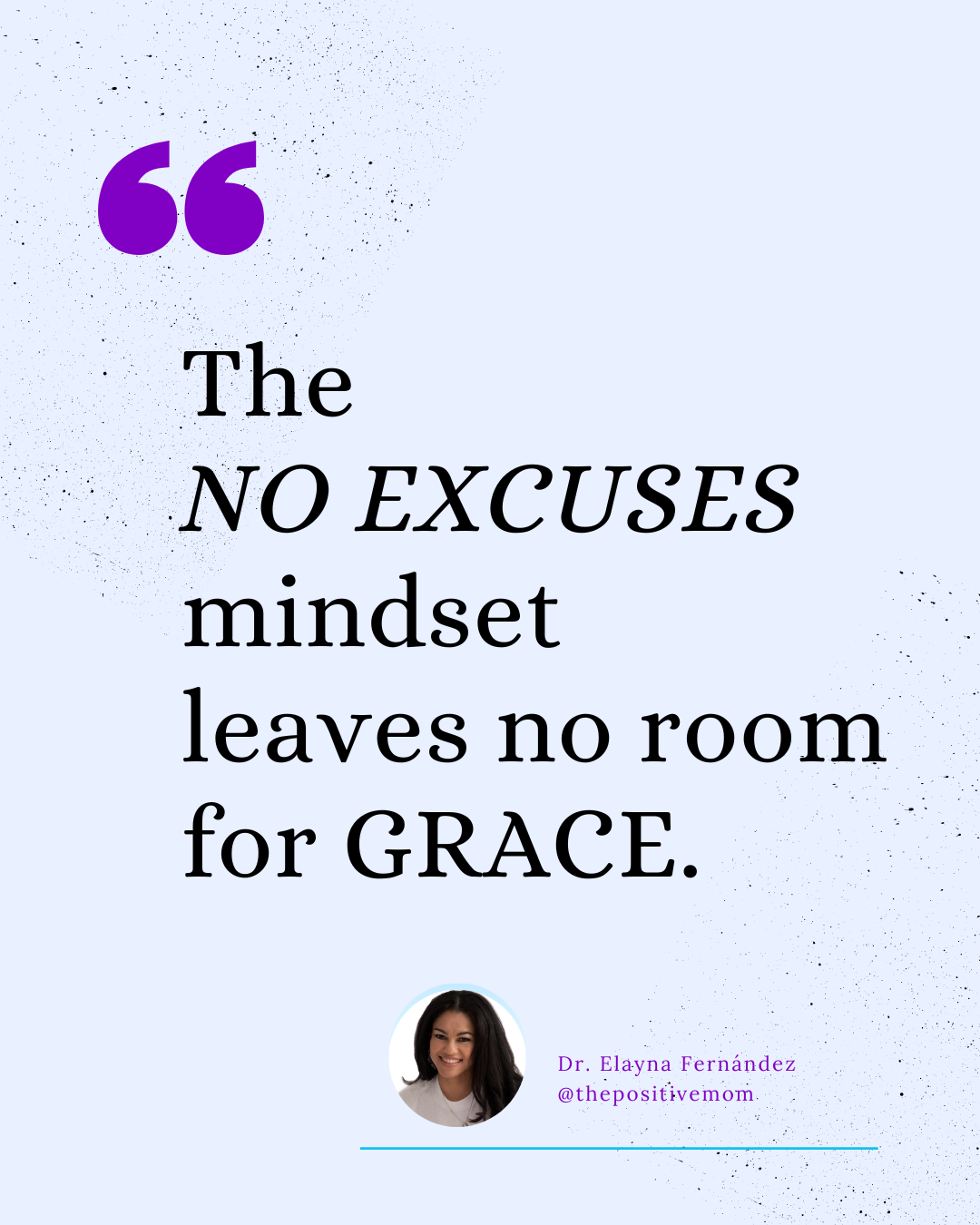
However, I always say that “the no excuses mindset leaves no room for grace.” And we call everything an excuse!
Does JUST DO IT ever work?
The JUST DO IT advice only works when you already know exactly what needs to be done, when the task is simple, concrete, low-risk, well within your competence and capacity. You know exactly what to do; it’s doable. While you might not be entirely comfortable with the idea, you feel confident, capable, and competent. But that’s where we find the gap: not everyone has the same ability to just do it, even when it seems simple.
When the advice JUST DO IT is offered as a universal panacea for every challenge, it becomes bad advice for many. And that’s when it’s usually given: in advertisements, motivational conferences, and even churches!
Want an example?
Imagine encouraging someone to send a cold sponsorship pitch or apply for a paid speaking opportunity when they lack the credentials, preparation, or assets needed to land it.
Yes, they will just do it, but they just won’t get it. Savage? No, just facts, girl!
The dopamine will wear off, and their lack of preparation and lack of thoughtfulness might even jeopardize future opportunities.
As Ralph Waldo Emerson said, “Shallow men believe in luck. Strong men believe in cause and effect.” Cause and effect” is intentional, methodical, and based on reasoning, logic, preparation, and faith – because faith without action is dead.
Or how about those situations in which you try to JUST DO IT, but the task feels so daunting and overwhelming that you become sorely aware that you can’t just do it, so you think there’s something wrong with you?
JUST DO IT doesn’t apply to everyone every time, and it can be more harmful than helpful in many cases.
2. Why “JUST DO IT” Fails the Brain Science Test
Have you seen the movie The Secret or read the book? I’ve had the privilege to share the stage with many of the teachers in The Secret and even worked as part of their team of advisors (think Bob Proctor, Jack Canfield, Lisa Nichols, and more!).
John Assaraf, one of the featured teachers in The Secret and a New York Times Bestselling Author, often shares about the neuroscience behind why JUST DO IT fails. The nucleus accumbens (NAc) and the insula are two brain regions that work together to form our internal motivational system. The NAc primarily drives reward-seeking and motivation, while the insula acts as a “brake” or regulator. The strong pull of “just do it” lights up this area of our brain and sends the feel-good chemicals (dopamine, adrenaline).
Yes, JUST DO IT might temporarily get us moving, but, as you may already know or even have experienced, “most people who just do it stop doing it within a day or two or three or four,” as John Assaraf explained. “The brain research tells us that when we initially get this excited feeling and that dopamine is released, there are also some counter neurochemicals that play a part in just doing it.”
The WHAT IF voices take over:
- What if I just do it and I fail?
- What if I just do it and I succeed, and I can’t maintain that level of performance or behavior?
- What if I just do it and disappoint myself or someone I love in my family, like my children, my spouse, or someone I work with or for?
As an IFS practitioner (Internal Family System), we call these voices “parts.” Some parts want us to “just do it,” while other parts want to save us and protect us from heartache, embarrassment, and pain that we have experienced in the past. As these thoughts and memories surface while we “just do it,” the protective self-talk overrides the Nike slogan and its rush of motivation. “Just do it” then causes fear, causing one to moveback into the safety zone.
Let’s talk about other neuroscience-based considerations:
a) Willpower is limited
According to researchers in psychology, the idea that you can simply rely on willpower — JUST DO IT — is deeply flawed. I always talk to my clients and community about how commercials overlook that the athletes who just do it have coaches for every aspect needed to achieve their goals.
Athletes have a game plan, regimen, routines, strategies, resources, and support systems to feed their willpower and ensure that they “do it.” They don’t “just do it,” they are set up to do it when willpower fails.
Neuroscience confirms that willpower is finite. Imagine someone telling you to JUST DO IT when your stress or trauma responses activate! This is not sustainable because our prefrontal cortex is offline when in a triggered state.
b) The brain resists change
One thing common to every human brain is that it doesn’t treat change as if it were ever a good idea. According to neurobiology and decision-making, the brain needs to calibrate behavior – assessing the risks and rewards.
When you say phrases like JUST DO IT, you bypass that calibration and cause the brain to create resistance.
c) The problem is often underlying, not just the task
Most of us aren’t lazy procrastinators, just waiting around until someone utters the magic words JUST DO IT that will cast the magical spell to make our dreams come true. There’s more behind our inaction. Procrastination is not the problem -it’s the symptom of something (or multiple related underlying issues) that’s really going on beneath the surface.
Many of us have actually tried to just do it a million times, and it seemed like an impossible task. Because JUST DO IT seems to be easy and to work for everyone else, but not for us, we start to think that our brain is broken – that we are broken.
When you say JUST DO IT to someone who’s been procrastinating on something, they:
- feel not seen, not understood
- feel like their struggle is not legitimate
- feel hopeless and alone
The advice of JUST DO IT makes it seem like “doing it” should be easy. But “doing it” is precisely what feels anything but easy to “the procrastinator.” It is an insurmountable hurdle.
This gaslighting and invalidation sends the message that “normal” people can just get over it, no matter what. It can make someone feel defective on a fundamental level, and their self-esteem and mental health will suffer.
What’s worse is that when we internalize the poisonous labels of lazy, procrastinator, slacker (and who knows what others), we don’t address the emotional, physical, and environmental roots of the problem.
3. Contexts Where “Just Do It” Is THE Worst Advice
JUST DO IT, just like its cousin, “just stop it,” doesn’t recognize that every individual is different and faces unique challenges. When we think that everyone is fighting a battle, we don’t make the mistake of oversimplifying the emotional, mental, environmental, or even behavioral context of someone in our lives.
JUST DO IT lacks compassion, context, and caring. It does not extend understanding, which is what one needs, especially when it seems the whole world is watching you fall and not offering a hand.
JUST DO IT just doesn’t work for real people. See what I did there?
Let’s talk about some scenarios where this is awful advice is damaging and demoralizing, and this is just scratching the surface:
a) Neurodiversity and ADHD
When someone has ADHD, they don’t have determination, so expecting them to perform equally or better than their peers is completely unrealistic. We’ve probably all expected someone to just do something we thought was easy or simple when dealing with imminent barriers to functioning on a daily basis.
Yeah, we didn’t do it intentionally. I know this with all my being. BUT, when we learn that this expectation is dismissive, to say the least, then we must strive to do better.
If you are neurodiverse or understand that your brain is wired differently, feel free to ignore the “JUST DO IT” advice and remember to show yourself grace.
This free advice is indeed motivational shame.
b) Mental Health and Emotional Challenges
When someone is dealing with depression, anxiety, trauma, or emotional challenges, the idea of “just doing it” can be extremely invalidating. It ignores what the person is already doing: showing up, enduring, surviving.
I can tell you that during times of PTSD flares or suicidal thoughts, I feel like getting out of bed alone is an achievement, and if I manage to brush my teeth, wow…. bonus points.
JUST DO IT neglects the state of mind we’re in, which is uncaring. Telling someone JUST DO IT may feel like: “You should be better by now,” which is both unhelpful and harmful.
When you’re healing from trauma, anxiety, or depression, JUST DO IT invalidates your experience.
c) Chronic Illness or Physical Health Constraints
If a person has a chronic illness, what counts as a “task” or “step” may look different. The JUST DO IT mentality can make them feel defective for not meeting full-strength norms. And it doesn’t really matter that that’s not your intention – it is how it often lands when someone has an invisible illness or disability.
Instead of acknowledging scaled steps (little things), they are told to “go full-speed.” That’s not only unrealistic — it ignores the need for pacing, adaptation, resting, and healing.
For those living with chronic illness, JUST DO IT disregards pacing, energy management, and bodily wisdom. Listening to your body — honoring rest — is the right thing and part of sustainable progress.
d) Big Projects, Long Periods of Time, Long Process
Ohhhh, this is a big one, especially around January with the so-called New Year’s resolutions. When someone embarks on a lofty endeavor—such as writing a book, launching a business, healing from trauma, or building a strong relationship—the JUST DO IT mantra is especially harmful.
JUST DO IT fails to account for time, the necessity of small list-style steps, the long period of time required, and the iterative nature of growth. It also ignores the self-doubt and second-guessing that come up, because when we are going for our dreams, we face both inner and outer struggles.
For example, if you have two people pursuing the same goal, the situation might be different for someone whose children are grown or who never had any, than for another who is juggling house chores, professional work, and raising toddlers. You can tell her to JUST DO IT all day everyday – but can she?
e) Beliefs or Thought Patterns
If it were really as easy as you think, we would in fact just do it – no motivation or pressure needed. Don’t you think?
It’s not the thing that feels daunting; it’s the mental roadblock tied to the thing. That’s why we procrastinate and postpone it.
To an outsider, it might look like perfectionism, procrastination, laziness, or simple work refusal or avoidance, but there’s more to it: from lack of clarity, fear of rejection or failure, or deep beliefs and thought patterns that make it unsafe to act.
A trauma-informed approach asks: “What feels safe enough to begin?”
The JUST DO IT mindset often falls apart because real progress comes from understanding what’s holding you back and working with it, not against it.
f) Transition Phases
For adolescents and young adults making sense of their careers, social skills, emotional development, and life themes, telling them JUST DO IT ignores the need for reflection, values alignment, figuring out what’s a good fit, and recognizing that the first step may be clarity, not action.
The same applies to anybody redesigning their life after a job change or divorce: sometimes the first step is deciding what you want, not just “do something.”
In fact, just doing something might be catastrophic because we might make huge mistakes we come to regret, and, to be honest, we might also come to resent the person who offered the JUST DO IT advice. Don’t let that be you!
What Works Instead: Good Advice Built on Neuroscience ~
The Trauma-Informed Positivity™ Alternative
Given all of the above reasons to scratch JUST DO IT from your vocabulary, here’s a different, better advice — one grounded in neuroscience, mental health wisdom, and sustained growth.
1. Find Clarity through Curiosity
Trauma-Informed Positivity™ invites us to pause and notice the emotional charge beneath the JUST DO IT impulse.
Very often, the first step on a journey isn’t to just do it but to reflect and reconnect with your “why” before getting to the “what.” Starting with acts of regulation creates safety in your nervous system — a prerequisite for meaningful action.
Think questions like:
- “Would I be acting from self-trust or shame or self-pressure?”
- “Is this a good fit for me right now?”
- “Am I in the right physical, mental, or emotional state to take this action?”
When you align with your values and state of mind, the action becomes less random. Good intentions aligned with clarity reduce resistance and produce sustainable results.
In the same sense, you want to get curious about any resistance, fear, or doubts that might be coming up and what the underlying causes might be.
- “What am I trying to avoid?”
- “Why is this triggering for me?”
- “Why does this feel like shame and pressure?”
Yes, this assessment may delay action to focus on a calm nervous system. You support the state of mind to take actions that truly matter and align with who you’re meant to be. This is not just worth it, but it will also yield the best results.
2. Acknowledge What’s Needed
Before launching into JUST DO IT mode, you want to ask what is necessary. This is a smart step, even if you’re buying tennis shoes. Wink, wink.
Some of us will need preparation, education, training, coaching, therapy, help, emotional support, a person or team to delegate something to, additional money, or time allocated to complete the task, etc.
Some people say, “We all have 24 hours, just like Beyoncé and Oprah,” and that’s a very unfair comparison. I don’t know about yours, but their 24 hours look absolutely nothing like mine! Needless to say, their environment, support system, time, and money freedom are on another level.
A Trauma-Informed Positivity™ is not based on comparison, but on a conscious effort to honor your capacity. And even Oprah’s and Beyoncé’s capacity will fluctuate with sleep, stress, and scaffolding levels. Right?
There is no “Just” to doing it; it’s deliberate, intentional, purposeful action that comes from thoughtful consideration. Before buying into the JUST DO IT campaign, it’s wise to ask: “What kind of support or accountability would be helpful to make it work?”
JUST DO IT might sell shoes, but it doesn’t heal hearts, build habits, or sustain purpose. JUST DO IT doesn’t provide an actionable framework or blueprint for taking strategic steps and preparing for the goal.
3. Choose systems and steps that are right for you
JUST DO IT can be impulsive, random, and misaligned, which leads to burnout. A far more sustainable approach is: “What’s one small step you can take now?” This is especially important when the goal is large, you’ve felt stuck, or you’re dealing with any emotional / health / cognitive burdens – whether long-term or temporary.
When we replace JUST DO IT with “do what you can,” and “do what you know is right,” we can set ourselves up to win, celebrate, and leverage that momentum.
I say this because I absolutely love this quote: “Do what you can with what you have from where you are.” Squire Bill Widener said this, not Theodore Roosevelt, by the way. But the point is that this is the approach we need – one tailored to our context, environment, and pace.
It’s about focusing on doing the right thing for you and doing what only you can do.
Work with your brain
Neuroscience tells us that the brain loves predictability and rewards. Following proven patterns, blueprints, roadmaps, and formulas, and establishing winning supportive systems and routines to perform small, doable, and consistent actions is how you attain achievement.
And, of course, we can’t win them all, so we will fail or fall “off track,” sometimes. That’s healthy growth. In these moments, the brain and body both respond to signals of safety, compassion, and rest. It’s not the time for the JUST DO IT shame, but for celebrating your progress and embracing your pace without shame.
A few prompts for celebration:
- “What went right with what you did?”
- “What did you learn that did not work?”
- “What can you choose to be grateful for?”
Replacing guilt with gratitude will rewire your brain and strengthen your neural pathways toward true growth, wholeness, and fulfillment.
You don’t have to JUST DO IT to succeed
The good news is that positive psychology, neuroscience, and compassion agree: You don’t have to buy into the simplistic JUST DO IT mantra. My framework, Trauma-Informed Positivity™, reframes action through self-attunement: “I can take one small, kind step today. That’s enough.”
You don’t have to force yourself into action. You can nurture yourself into momentum — and that’s a far more powerful and lasting way to do the right thing for your life, your purpose, and your peace.
Give yourself permission to customize your approach. One that is human, realistic, aligned with your context, that values pacing, small steps, consistent effort, reflection, and most importantly, grace. One that shifts to “progress over time,” “small consistent effort,” and “strategy plus action.”
When we merge neuroscience, self-compassion, and Trauma-Informed Positivity™, we move beyond slogans and into sustainable transformation. You realize that slowing down, tending to your needs, and taking intentional, healthy, small actions are not weak — they’re strategic.
Shedding the JUST DO IT Shame
Your brain needs safety, not shaming. Your brain doesn’t respond to pressure, shame, or oversimplification. The brain performs best when it feels safe. JUST DO IT language can trigger threat responses — fight, flight, freeze, or fawn — rather than motivation. In contrast, compassion, curiosity, and co-regulation help re-engage motivation circuits.
The Trauma-Informed Positivity™ approach transforms your mental health, physical health, social skills, and your own career path; your whole self. You’ll still move, maybe even faster, because you are no longer stuck in guilt, frustration, or emotional overwhelm. You’ll achieve more over time because you’re building from a foundation of safety, not shame, of self-trust, not self-force, of compassion, not coercion, of understanding, not urgency.
To know whether you’re on the right path, a key indicator is whether you (or the person you want to help) feel understood, accepted, and hopeful. Hope is always a great place to start a journey and makes a huge difference.
So now it’s your turn to answer, “What support do you need to take the next gentle step toward what matters most?” Share with us in the comments section below.
Founder of the Positive MOM® and creator of the S.T.O.R.Y. System: a blueprint to craft and share powerful stories that will transform your results and help others do the same. Dr. Elayna Fernández is a single mom of 4, an award-winning Storyteller, Story Strategist, and Student of Pain. She’s a bestselling author, internationally acclaimed keynote speaker, and 5x TEDx speaker. She has spoken at the United Nations, received the President’s Volunteer Lifetime Achievement Award, and was selected as one of the Top Impactful Leaders and a Woman of Influence by SUCCESS Magazine. Connect with Elayna at thepositivemom.com/ef and follow @thepositivemom. To receive a gift from Elayna, click HERE.
Want to support the Positive MOM blog?
The mission of the Positive MOM blog is to help moms break trauma cycles, find peace, and feel emotionally whole, so they can practice supportive parenting and create a positive and healthy environment for their children. If you found Elayna’s content valuable, please consider donating a love offering to enable her to keep creating content and helping more moms worldwide. Donate HERE.
Julie
Monday 16th of February 2026
Thank you.