
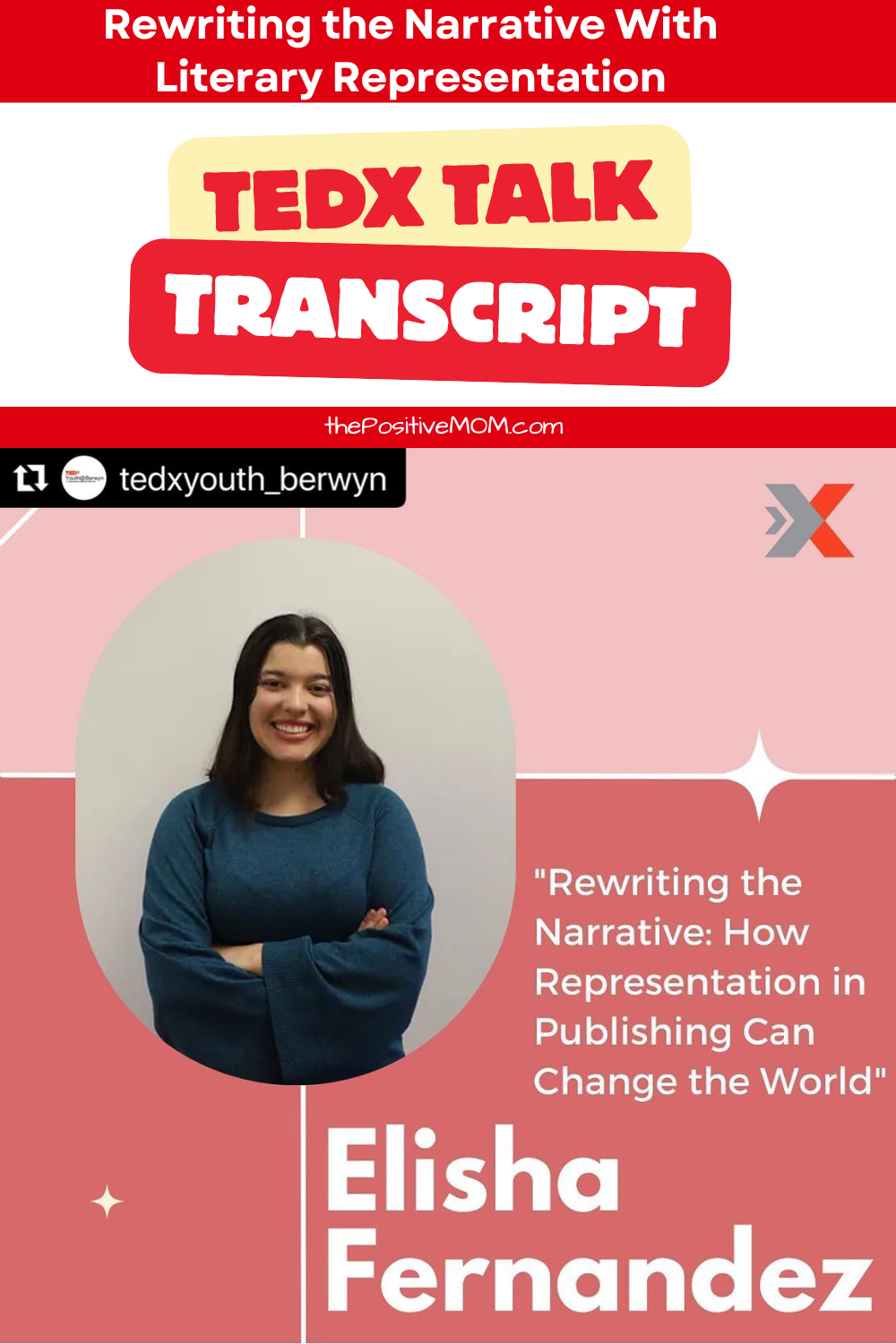
Elisha and I met in Pennsylvania for a special event: She was about to deliver her TEDx talk at TEDxYouth@Berwyn.
The TEDxYouth Berwyn theme “Small Actions, Big Impacts” explored how our decisions create ripples beyond what we may expect.
The talks answered the question:
“How can we take small steps to create the change we want to see in our communities?”
“How can different ideas, ranging from scientific discoveries to personal breakthroughs, impact others”
Their theme was about how actions, even ordinary ones, can lead to positive or significant outcomes.
TEDx Youth Berwyn
This TEDx event occurred on May 27, 2023, through a live broadcast. It was organized by Manya Gupta and co-organized by Subah Gupta.
Speakers at this TEDx event included Brian Dzingai Former Olympian & Entrepreneur, Robin Camarote Executive Coach & Consultant, Phoebe Omonira Empathy & Global Responsibility Advocate, Mia Hazlett Single Professional Mother, Graham Cochrane Entrepreneur & Author, and Elisha Fernández Author & Editor.
Who is Elisha Fernández?
Elisha is a 20-year-old Latina best-selling author, international public speaker, and award-winning editor. She is passionate about using her art, stories, and ideas to empower, uplift, and motivate teens and young adults. Her family is from the Dominican Republic, and Elisha is proud of her heritage. Elisha is a senior in college at Brigham Young University in Editing and Publishing with minors in Communications and Linguistics in April 2023. Elisha has published and contributed to multiple books, and is currently working on an academic Honors thesis collecting data on the representation of young adults of color in the YA publishing industry. She plans to pursue book publishing as her career and keep writing and publishing her own books.
Spoiler alert (if you haven’t figured it out by her last name), I gave birth to her. She’s my firstborn daughter.
What is Elisha’s TEDx Talk about?
How can we increase representation in literature?
Elisha Fernández shares her personal experiences on the topic and explains how there can sometimes be a lack of diverse characters and narratives today. She calls on individuals to share their stories to help add to those narratives.
Elisha shares her perspective on how increasing the representation of minority groups in the literary world can uplift and inspire the youth for a better future
This talk was given at a TEDx event using the TED conference format but independently organized by a local community.
Elisha’s TEDx Talk
You can watch Elisha’s TEDx talk on YouTube or on TED.com and her script / transcript is below.
TEDx Talk Transcript: Rewriting the Narrative With Literary Representation
Do you remember the first time you found yourself lost in a book?
My mom tells me that I started reading when I was around three years old. I was actually eight months old when I started organizing my books by size, color, and in alphabetical order.
I quickly advanced from picture books to early reader chapter books to volumes of fantasy and self-help. I would visualize myself as a thin, graceful princess with smooth, ivory skin, long, blonde hair, and two perfect, loving parents.
I admired Jo from Little Women and her tenacity in being a free-spirited writer, following her dreams despite what society told her, Hermione’s wit and know-it-all-ness, coming up with clever solutions to protect and help her friends (Harry Potter), and the imagination of Anne of Green Gables, who turned her entire world and the most hopeless of situations into colorful fairytales.
Looking in the mirror constantly reminded me that I would never truly look like, or be like, the heroines I loved and looked up to.
Growing up as a Dominican mixed-race girl in a single-parent household, I did not feel represented in the books I consumed. There was a disconnect between me and the subjects of the fairytales and other books I read because I did not and could not relate.
I found myself wondering why there couldn’t be a Latina princess or heroine with a curvy body, thick brown hair, and a single mom. So, I set out on my own journey to find these characters (in books).
I pored over hundreds of books, longing for a character like me, one I could read about and feel an instant connection. I dreamed of the day I could read about a character and think, “Wow, they’re just like me!”
It turns out, I am not alone in these experiences, at least in terms of publication statistics.
Lee & Low Books conducted a Diversity Baseline Study in 2019 and found that in the publishing industry, there is an evident problem with representation and diversity. 76% of authors in the industry self-reported as white/caucasian.
This is reflected in the characters these authors write about, as one quote by musician Layne Staley puts it: “We write about ourselves because we know about ourselves.” Since most authors are white, there aren’t many Latin characters in books.
Feeling this disconnect urged me to look for answers:
Where were the authors and characters of color?
Why was there such an issue with representation in publishing?
What could I do about it?
Little Elisha was frustrated and devastated because no one looked or acted like us in the books she was reading.
I remember asking my mom these same questions, and how she responded inspired me and directed me to the path I’m on today, to be here on this stage. She encouraged me to be the solution. So I decided to do something about it myself and pursue a degree in Editing and Publishing.
I found that no one else was talking about this representation issue. My goal became increasing and improving the representation of people of color in literature so that they could feel seen and heard.
I recently completed a thesis at my university with the aim to talk to young adults of color, and ask for their thoughts on representation in literature. I surveyed over 400 young adults who identified as Black, Asian, Hispanic, Native American, or otherwise people of color, from ages 18-26, asking them a series of questions on how we can improve the portrayal of BIPOC: Black, Indigenous, and people of color in literature, how literary inclusion impacts their reading habits, and, most importantly, how representation impacts their lives.
After months of intensive research I confirmed that representation does matter. I discovered that young adult readers of color crave more representation in the books they are reading. They want to see more main characters like them, with stories centered around BIPOC narratives. Feeling seen and heard by book characters prompts us as readers to read more often, and enjoy the books we are reading more.
Young adults of color expressed that when they see themselves represented in these stories, they feel empowered. As one participant said,
“It’s important for young people to see themselves represented in the stories that they read. It makes them feel like they can be the hero of their own story, and that they can achieve anything they want to achieve. It also helps them realize that there are people like them out there, and that they might not be alone in facing challenges or feeling different from others.”
Do you see how powerful that is?
Representation can have a positive impact on identity, helping young adults of color find their place not only in a story, but in the world. One young woman expressed:
“Having diversified characters with different race/ethnicities would’ve had a profound impact on my identity as a Biracial Female. This would have been instrumental during my teenage years but even now as I am navigating race and gender roles in America.”
These young adults also brought up a crucial point: it’s not just representation that matters, but the natural integration and normalization of stories about people of color. I loved how one girl put this:
“Just more natural inclusion would mean a lot. It doesn’t have to be overt. I remember being obsessed with the Hunger Games for the tiny details of Katniss having darker skin and also being a really quiet individual who struggled to make friends, which was exactly what I was like growing up. It was so impactful to me, because never before had I ever had a story with a character like that, or like me.”
The second thing I found was that we need to talk more about the stereotypes and book themes that discourage young adults of color from reading.
One respondent mentioned one of their biggest pet peeves is when authors include several random ethnicity side characters to simply fill a “diversity quota.” Yet these characters have no personality, no character development, and no real culture that can appeal to audiences of color.
As people of color we are hyper aware of these stereotypes.
- Asian characters are portrayed as smart sidekicks; and Asian women are often shown as “quiet” and “submissive.”
- Black characters are sometimes characterized as violent and abusive.
- Latin or Hispanic characters are similarly rendered as criminals, overly sexualized, or put in domestic service roles.
Not only do these stereotypes create a disconnect between young adults of color and the literature we consume, it also takes a toll on our own perception of our worth and value in the world.
I remember seeing Hispanic characters written as the antagonists, the “bad guys”, and the women specifically were destined for no more than a life in the background or worse, torn down and degraded by other characters.
The representations I saw of my own culture in not only books but other forms of media were demeaning, dehumanizing, and demoralizing. Watching these representations confused and saddened me:
Was my family—was I—anything more than entertainment for white peers to poke fun at?
I remembered seeing Latina women represented as uneducated and unskilled. My mom would often get comments assuming her to be capable of less or only capable of harm in the predominantly white communities we lived in. It was heartbreaking to watch people treat her like a second-rate citizen.
I can’t help but wonder whether the media they consumed was largely responsible for their racial bias. Perhaps if our culture had been portrayed realistically and authentically, things might have been different.
Possibly my favorite quote from a survey participant summed up all of this perfectly:
“Write us as more than our stereotype, show more of our multifaceted qualities because we all are, at the end of the day, people.”
The final important observation I made is that there simply isn’t enough awareness about current literature that does include diverse characters. When asked for recommendations for what could be done to increase representation, one person said:
“Make these books more widely known to young adults. I don’t really know of books with Hispanic characters because I never hear of any.”
Young adults need these books in mainstream publishing, and these books must be included in our homes, our workplaces, and our classrooms.
As we see with these quotes and stories, the lack of representation in publishing needs to be addressed. We must do better.
When young people see themselves represented positively in literature, it could boost their self-esteem, help them develop a positive sense of identity, and maybe even lead to greater success in life. On the other hand, when they are constantly bombarded with negative stereotypes and depictions of people in their ethnic and racial groups, it can have the opposite effect, leading to feelings of inadequacy and low self-worth.
It’s not just about the impact on young people, however. The lack of representation in publishing also has wider societal implications. When we don’t see people of color represented, it reinforces the notion that they are somehow “other” or “different” from the norm. This can lead to prejudice and discrimination, as people may subconsciously or consciously view people of color as less important or less valuable than others. Representation can rewrite our society’s narrative of exclusion and homogeneity into one of inclusion and celebration of diversity.
I have dedicated my professional life so far to researching the representation of people of color in literature, yet much more needs to be done. So, what can we do now to push for more change? I’ve come up with three crucial steps:
First, we need to increase the number of diverse authors so that we can ensure that a wider range of voices and perspectives are represented in literature.
I’ve contributed to this myself by writing and publishing my own works to add to the current collection of books written by Latina authors.
If a young adult of color is watching this on the fence about picking up the pen and telling their story, do it! We need you, and we need your stories. Continue reading and writing, and don’t give up hope, because it’s through us that the change can happen.
If you have a young adult of color in your life, encourage them to write themselves into the narrative and provide them with the tools and resources they need to succeed as writers.
Second, we need to emphasize using more sensitivity, respect, and accuracy when telling stories about BIPOC.
We need to encourage authors to write more complex and nuanced characters of color, and to move beyond the tired old tropes that have been perpetuated for decades. We can do this by reaching out to individuals of color and listening to their authentic stories with the aim to center the narrative around them.
And, don’t be afraid to SPEAK UP! Be willing to talk about the stereotypes that make you uncomfortable, and why they shouldn’t be used in the first place. We especially need more people who don’t belong to the BIPOC communities to advocate for our voices, who are willing to hold the torch and amplify our concerns.
Finally, we need to keep talking about this issue.
By having conversations like the one we’re having today, we can raise awareness of the importance of representation in publishing. Research authors of color so you can purchase and read their works, support independent bookstores run by people of color, and get involved in reading initiatives during Black History Month, Native American Heritage Month, Hispanic Heritage Month, and Asian and Pacific Islander Heritage Month.
Through these actions, we can encourage publishers to do better; we can inspire young people of color to pursue careers in writing and publishing. Imagine what the world would be like if everyone’s story was told.
We can rewrite the narrative, together. Thank you.
What do you learn from Elisha’s TEDx talk?
Share with us in the comments below. I am proud of her and the work she’s doing, and I know it’s making a difference for so many.
Founder of the Positive MOM® and creator of the S.T.O.R.Y. System: a blueprint to craft and share powerful stories that will transform your results and help others do the same. Dr. Elayna Fernández is a single mom of 4, an award-winning Storyteller, Story Strategist, and Student of Pain. She’s a bestselling author, internationally acclaimed keynote speaker, and 5x TEDx speaker. She has spoken at the United Nations, received the President’s Volunteer Lifetime Achievement Award, and was selected as one of the Top Impactful Leaders and a Woman of Influence by SUCCESS Magazine. Connect with Elayna at thepositivemom.com/ef and follow @thepositivemom. To receive a gift from Elayna, click HERE.

Want to support the Positive MOM blog?
The mission of the Positive MOM blog is to help moms break trauma cycles, find peace, and feel emotionally whole, so they can practice supportive parenting and create a positive and healthy environment for their children. If you found Elayna’s content valuable, please consider donating a love offering to enable her to keep creating content and helping more moms worldwide. Donate HERE.